On an autumnal trip to South Carolina, my family and I made a trip to Bulls Island. Not knowing much about the island other than the amazing wildlife to be found there, we didn’t realise the adventurous day out that we were in for.
“Don’t worry; an alligator has never attacked a human on Bulls Island,” the ranger said matter-of-factly as the ferry pushed on toward the island. My family and I, on a trip from the UK, looked at each other with wide-eyed glances. “But how could they attack anyone from behind barriers?” I puzzled. Little did we know.
We were visiting Bulls Island, South Carolina, for a fun day out after perusing a brochure that promised the chance to see alligators, snakes, some of the island’s 293 recorded bird species, dolphins and more. The brochure failed to mention that these encounters would happen without safety barriers! As it became apparent that we would not be separated from the wildlife, I smiled wryly at my city-loving mum, trying to hold back laughter; she had already suggested that the trip sounded more like something just for my dad and me.
“Bulls Island is the largest barrier island in the Cape Romain Wildlife Refuge,” the ranger continued in his infectious Southern drawl. Though it played a part in American cultural history—as a settlement location for early European settlers, an aid in the American Civil War and even a hideout for pirates—since 1936, the island has been owned by the U.S. Fish and Wildlife Service, and so designated a conservation zone within the Cape Romain Wildlife Refuge.
As a gentle November breeze blew through my hair, I filled my lungs with the refuge’s unpolluted air and relaxed, admiring the salt marsh we travelled along. This marsh was just one part of the 22-mile-long patchwork quilt of barrier islands, forest, ponds and intricate waterways making up the South Carolinian coastal refuge. Ultimately aiming to prioritise the island’s biological integrity, diversity, and environmental health above all else, the refuge would not allow visitor activity to impact the environment or animals’ wellbeing negatively. That explains the lack of safety barriers!
I wondered if we had been too adventurous as we learnt that we would explore this wildlife paradise solo, without a guided tour. The ranger reassured us, giving us details on alligator feeding patterns and their inability to travel far at speed—humans are of course given safety instructions, too, and are in no danger of being an alligator’s next meal (provided that they act sensibly).
Docked at Bulls Island and raring to go, we put on our David Attenborough hats and set off in search of an up-close alligator experience. Feeling as though we’d stumbled into Jurassic Park, we trod carefully along cabbage-palm-lined walkways and through magnolia-filled forests, anticipating alligators around every corner. Though our adrenaline was pumping, in the island’s beautiful, green surroundings, away from phone pings, breathing air untouched by city pollutants, we soon felt zoned out and calm. Even the less adventurous of our party (ahem, mum) said she felt surprisingly relaxed and content in the incredibly lush environment.
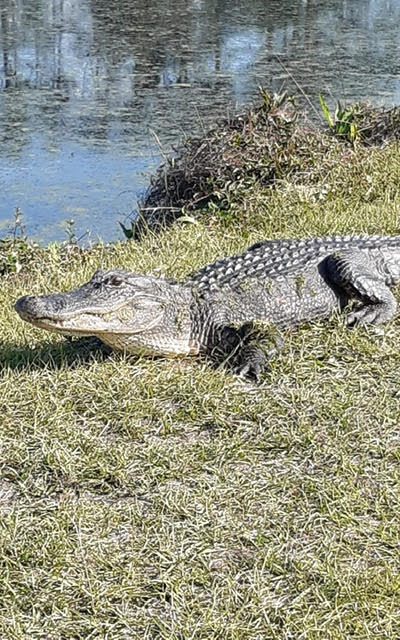
Suddenly, a fellow expeditioner startled us from our Buddha-like state of mind: “There are alligators straight through that opening!” Our hearts leapt. There they were! Through an opening in the low-hanging magnolia trees, we saw a long, grassy walkway with three magnificent and gargantuan alligators at its end—who said everything’s bigger in Texas? Hearts pumping, jaws dropped, we walked along the grassy path, surrounded by alligator-filled swamps.

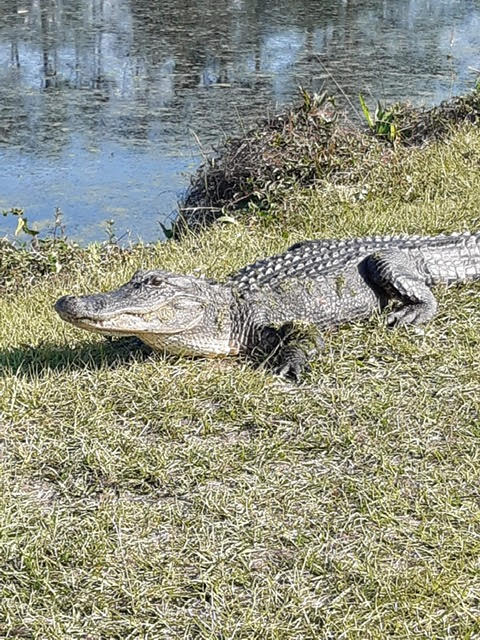
On approaching the walkway’s end, we stopped talking as we took in the alligators’ size. Too afraid to look, I followed my dad quickly past the land-dwelling gators. “Mum, what are you doing?!” I whispered, freaked out by her slow pace as she took pictures of the gators. How had her fear disappeared at this point?! Luckily, the alligators were clearly used to such attention; they remained unfazed, continuing to lie perfectly still and sunbathe.
Feeling braver myself, I looked at the gators, taking in their features: ridge-ridden backs, bright yellow eyes and stubby legs. Seeing them so still and minding their own business, my fears subsided further. Other tourists passed the unperturbed alligators, too, making the most of their chance to see the animals up close while at the same time keeping a distance and respecting their needs (they are wild and unpredictable animals, after all). Given South Carolina’s history of hunting the American alligator (unregulated until the 1950s) along with today’s threat of habitat loss, seeing the alligators thrive in a safe habitat was a ray of light.
There was no more time for reflection, though; we still had more to see! Having chosen to spend half a day on the island (I’d recommend a whole one), we followed our map through the maze of winding trails and woody walkways to the beach—our final stop. It was deserted (a perk of traveling to South Carolina in November and visiting the island on a work day), and we walked unrestricted along the cushion-like sand. “Look! A dolphin!” I shouted as a breaching backdisappeared into the waves. “There it is!” The dolphin moved parallel to the shore, popping in and out of the waves before disappearing into the distance.
Though we were eager for more wildlife experiences, the was sun beginning to dim, and we knew it was time to return to the morning’s drop-off point. Walking back, I imagined the excitement that must fill the air here in spring, when loggerhead sea turtles nest and long-distance migratory birds flock to the beaches and fill the ponds. A good reason to come back another time!
We shuffled onto our waiting boat, eagerly comparing stories with other visitors. Our friendly guide joined in with tales that surpassed any of ours: one recalling a recent elementary school trip that was crashed by a passing venomous snake, and another about a group of island workers who carried out an experiment involving walking through an alligator-filled swamp (luckily, all participants came out on the other side).
With all our stories told, there was nothing left to do but sit back and enjoy the South Carolinian surroundings. With the vast open marshland, blue skies and a sprinkling of typical Southern-style housing on the water’s edge, you’d be forgiven for thinking you’d stepped into a scene from The Notebook (which was largely filmed about 40 minutes away, in Charleston).
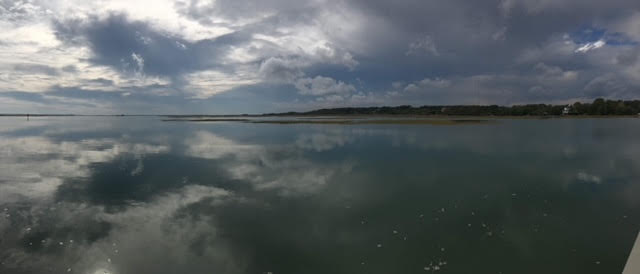
Our little boat moved determinedly through the remaining dense marshes as we approached the pier. As it docked, I took one last look around to take it all in: the marshes with water so black the clouds in the clear blue sky could admire their reflection below, and air so clean I couldn’t resist breathing in deeply to fill my lungs one final time.
As well as an adventurous and unforgettable part of our family holiday, our up-close alligator experience in the ecologically protected Bulls Island was an important reminder of the efforts that are still being made toward environmental stewardship. Given today’s often doom and gloom climate (pardon the pun) when it comes to the environment, it’s heartening to see evidence of humans creating safe spaces for wildlife. And in return, the alligators don’t eat us. It’s a win-win.
 Catherine | Writer
Leave a comment